From Flash Animations to WordPress: Websites I’ve Built Over the Years
I recently went down a rabbit hole on the Wayback Machine and ended up finding websites I built more than fifteen years ago.
It started innocently enough. I was looking through old websites from the early 2000s when I wondered whether any of my own projects were still floating around out there.
Turns out, they were.
I found my old Party Time website, complete with a Flash animation I created myself. Then I found Redcypress Designs from 2013, back when it was my freelance web development portfolio instead of the lifestyle blog you’re reading today.
The colors. The layouts. The animations.
Oh, the animations.
Looking at those websites again was funny, nostalgic, and a little strange. Some of them I hadn’t thought about in years.
It also got me thinking about how I ended up building websites in the first place.
That story starts in 1996.
It All Started With an HTML Class at LSU
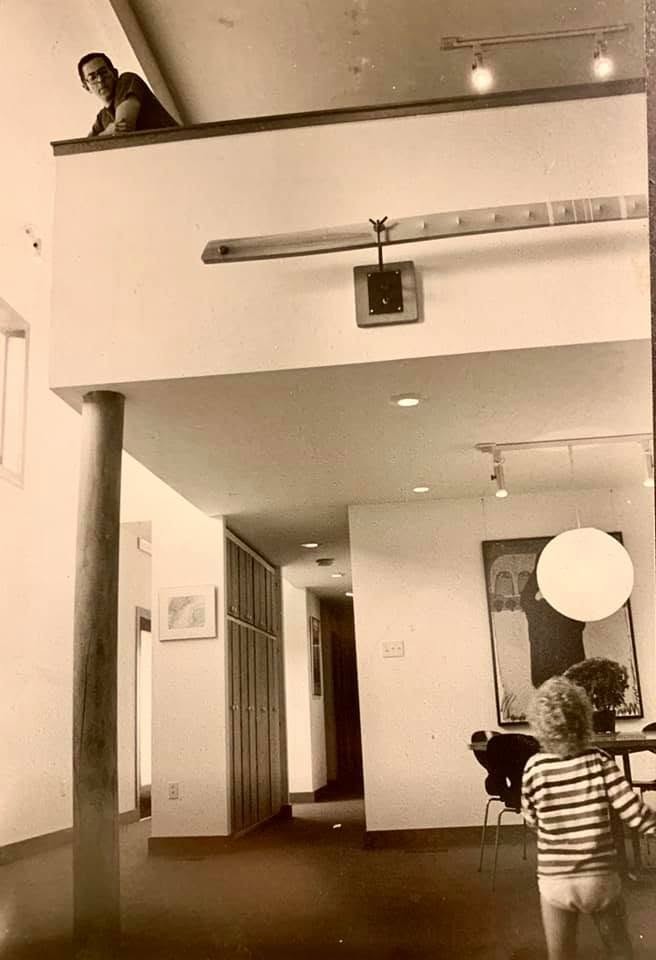
My dad, Michael Daugherty, was the director of the School of Art at LSU. He was an artist who loved technology and was always interested in what computers could make possible.
In 1995, he and his good friend Stephen David Beck founded MADstudio, a collaboration that brought together digital animation, visual art, and computer music.
The two of them used to spend their lunch breaks flipping through computer catalogs, looking at the latest technology and dreaming up what they could create with it.
So when Dad encouraged me to take a web design class at LSU in 1996, I gave it a try.
Now, when I say I took the class, I’m not entirely sure I was officially enrolled.
I don’t think it even appears on my college transcript.
I think someone just found me a chair.
But I showed up, learned HTML, and discovered something that would eventually become my career.
At the time, I had no idea I’d still be building websites nearly thirty years later.
When Flash Was Actually Cool
If you were building websites in the late 1990s or early 2000s, you probably remember Flash.
For a while, it seemed like everything on the internet moved.
Websites had animated introductions, interactive navigation menus, and buttons that did far more than simply take you to another page.
I loved experimenting with it.
For my senior-year résumé, I decided a traditional document wasn’t interesting enough. Instead, I created an interactive Flash résumé.
It featured a black square divided into four triangles by white diagonal lines. Clicking a triangle rotated the square and revealed a different section of my résumé.
I wish I still had that animation.
Not because anyone needs an interactive Flash résumé today, but because I’d love to see what I thought was so clever back then.
Yes, I Actually Printed My Source Code
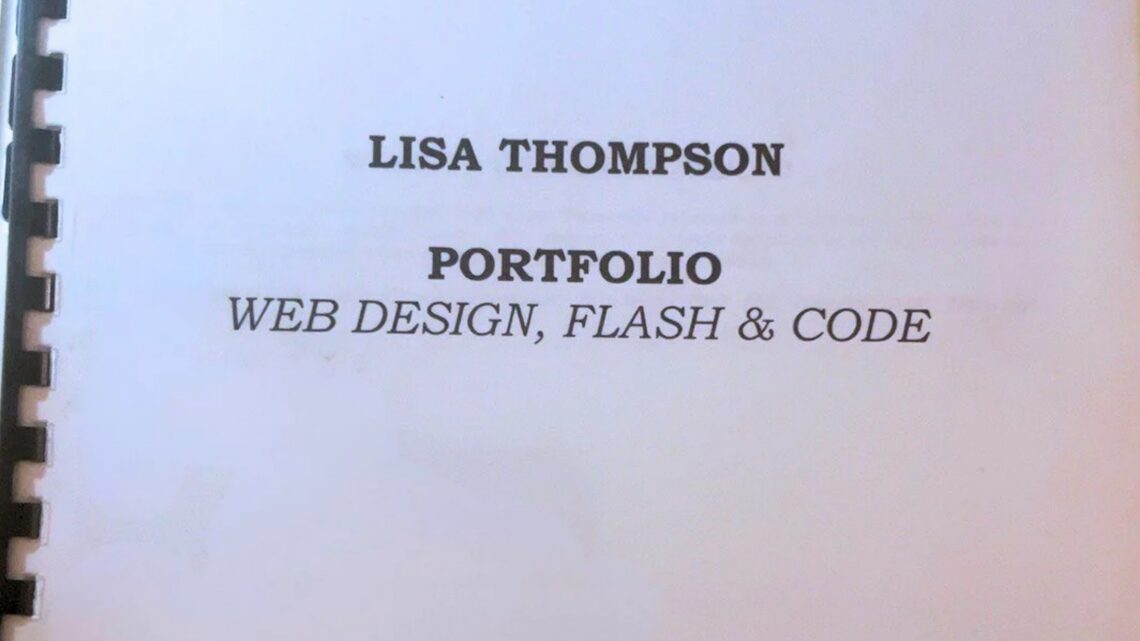
While looking through some old things, I found something I hadn’t thought about in years: my printed web development portfolio from 2005.
An actual, spiral-bound portfolio.
I used to take this thing to job interviews.
Inside were screenshots of websites I’d developed, project descriptions, and pages of source code.
Yes, I printed my code.
One of the projects was a recommended-weight calculator I developed for WiseMind, a health and wellness website at Pennington Biomedical Research Center.
The application performed calculations and displayed results and graphs based on user input.
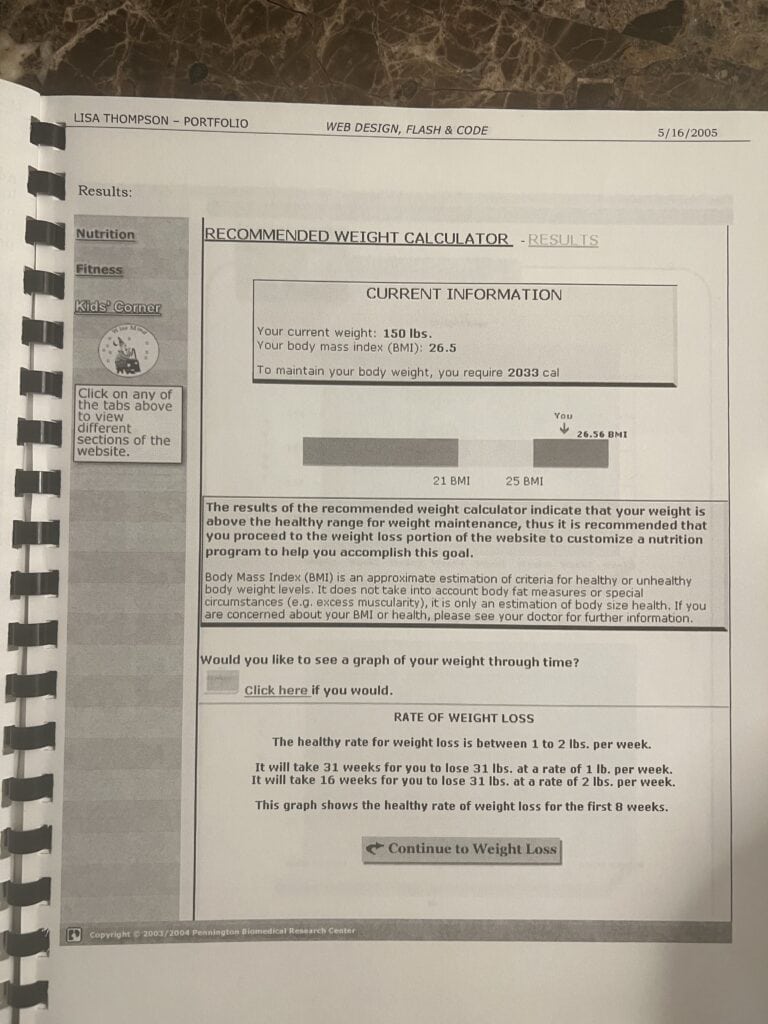
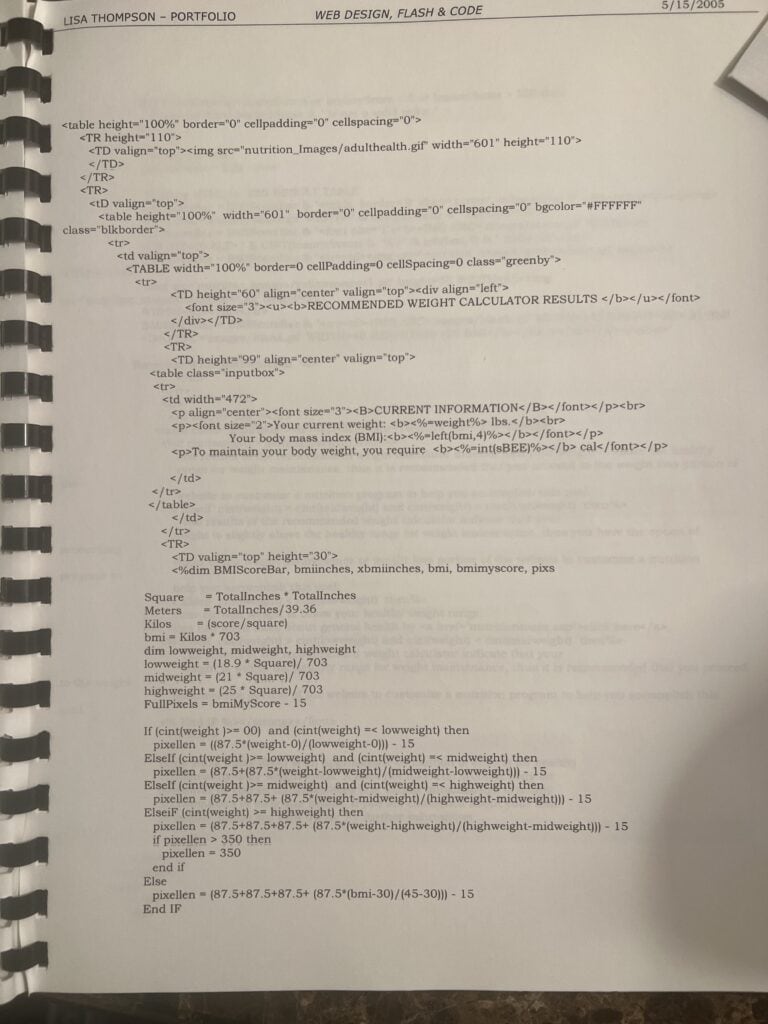
Looking at those pages today, I had to laugh at all the classic ASP and HTML tables.
There were no GitHub repositories to send someone. I wanted prospective employers to see that I could build the functionality behind a website, not just make it look nice.
So I handed them a binder.
The funny thing?
It worked.
That portfolio helped me land my job at the Safety Council.
Making Online Learning Interactive
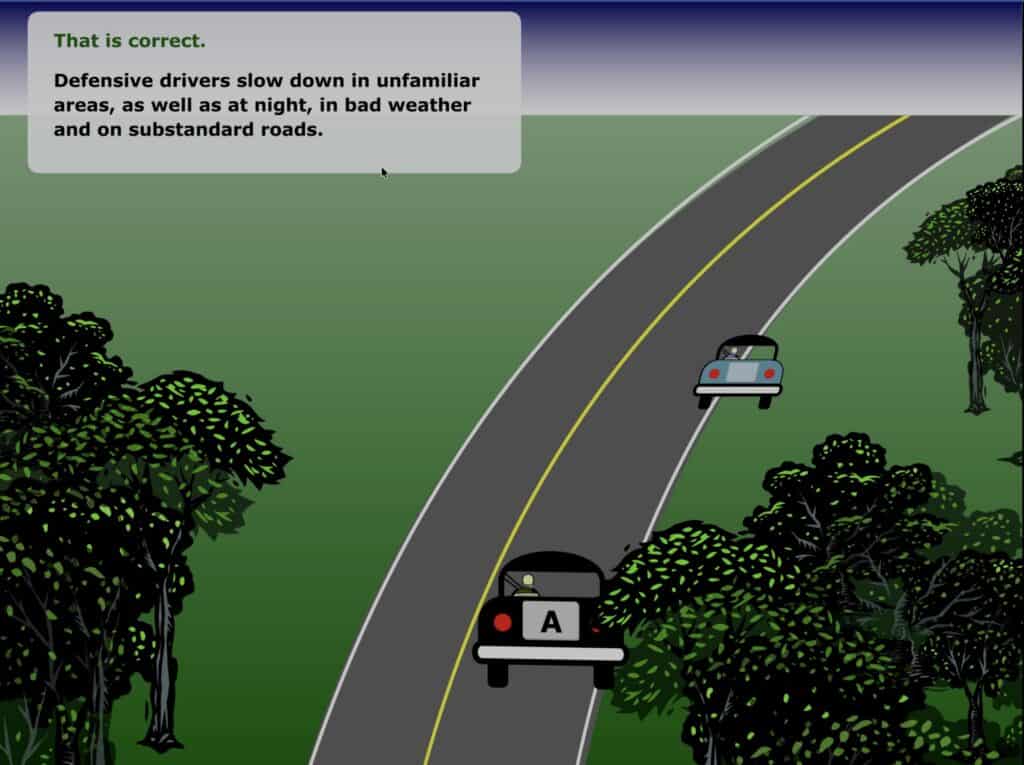
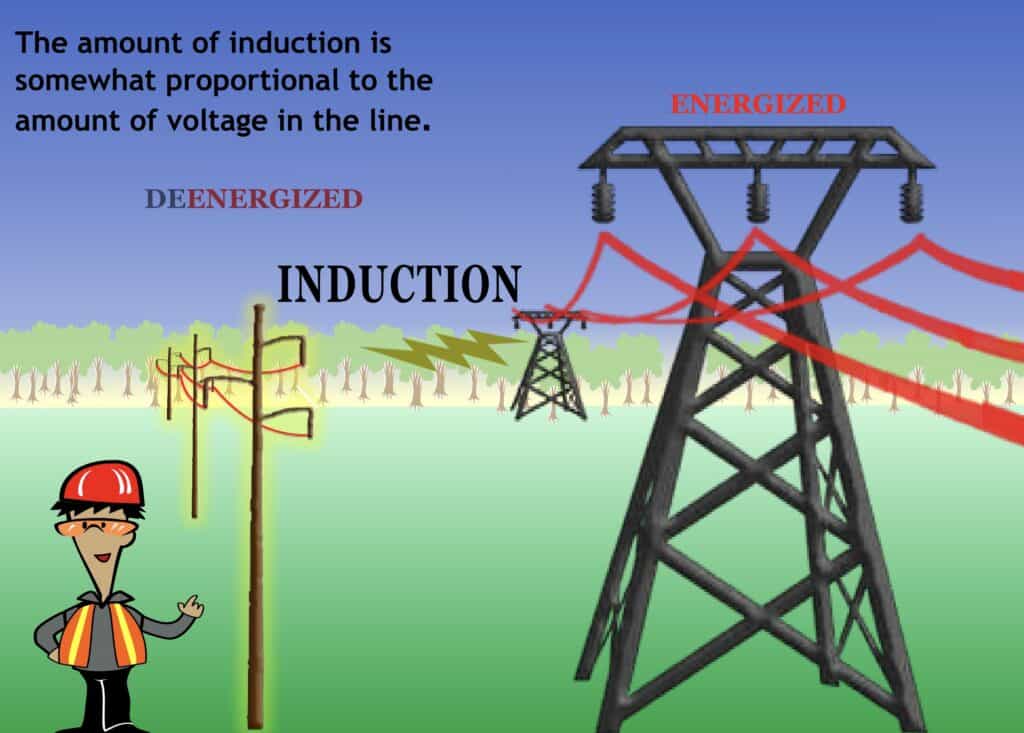
At the Safety Council, some of my most extensive Flash work involved developing interactive components for online training courses.
Sometimes I was given course material and had to figure out how to turn it into an interactive experience. Other times, I helped come up with the interactions themselves.
It was a combination of programming, creativity, and problem-solving.
I enjoyed taking something that could have been a static page and figuring out how to make it more engaging.
Unfortunately, most of that work isn’t something I can easily share today. The courses were developed for my employer, and Flash itself has long since disappeared from modern browsers.
But I still have a few pieces from that era, and it’s been fun looking back at them.
Rediscovering Party Time
One of my favorite finds on the Wayback Machine was my old Party Time website.
Unlike many of the client websites I developed over the years, Party Time was one I both designed and built myself. It was a fully functioning eCommerce website.
Naturally, it had Flash animations. Of course it did.
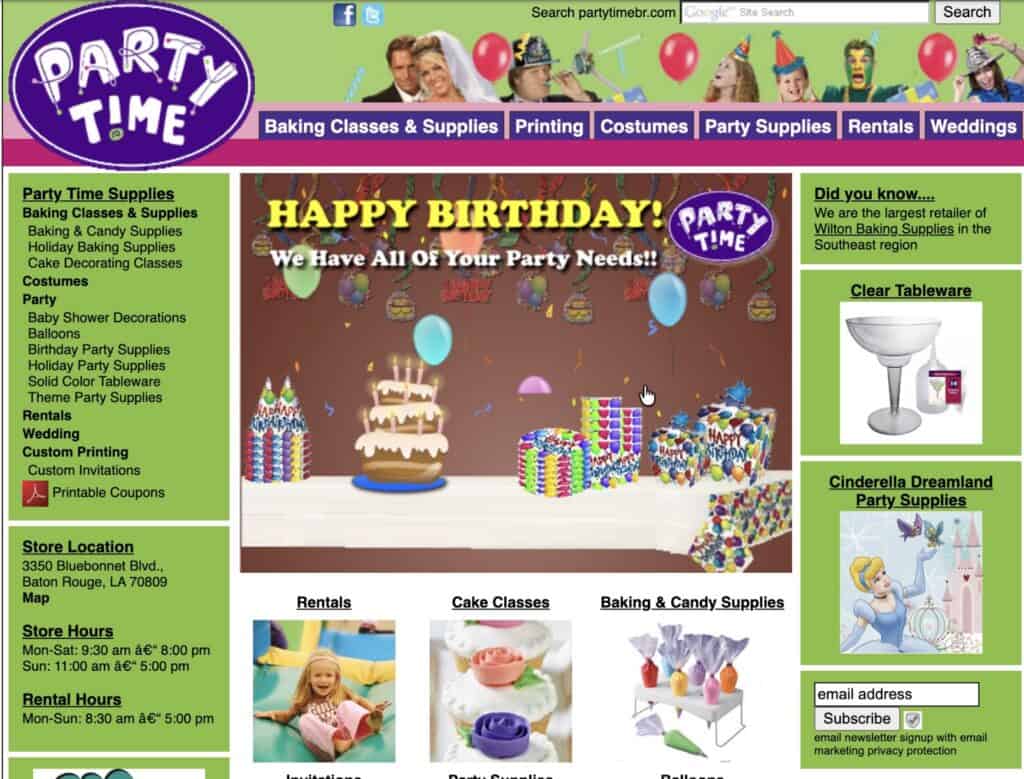
I found an archived version from 2011, and I couldn’t help laughing when I saw it.
The bright colors, the navigation, the layout, the animation — everything about it takes me back.
Would I design it that way today?
Absolutely not.
But I remember being excited about making websites interactive. There was something satisfying about creating an animation, testing it, and finally getting it to work the way I imagined.
Sometimes those animations were completely unnecessary.
But they were fun.
Looking at Party Time again reminded me of a time when the internet felt a little more experimental. Websites didn’t all have to look or behave the same way.
And apparently, I was more than happy to add a little Flash animation whenever I had the chance.
Turning Photoshop Designs Into Working Websites
Over the years, I’ve developed plenty of websites that I didn’t actually design.
For many client projects, I was handed Photoshop files, usually PSDs, and asked to turn them into functioning websites.
The designer created the visual layout. My job was to figure out how to make it work in a browser.
That meant writing HTML and CSS, building WordPress templates, and solving all the little problems that come up when turning a static design into a working website.
I actually enjoyed that part.
It was like putting together a puzzle without being given the instructions.
Sometimes a design looked perfectly reasonable in Photoshop but was considerably more complicated to build.
That was part of the challenge.
Looking back at screenshots of those sites, I still remember the satisfaction of finally getting a layout to behave the way it was supposed to.
AbbeyPost: A WordPress Marketplace
One of the more involved projects I worked on was AbbeyPost, a marketplace focused on plus-size fashion.
This wasn’t just a typical WordPress website. Members could create their own storefronts, and I developed the marketplace functionality myself.
There were quite a few moving pieces to figure out.
Unfortunately, AbbeyPost never really took off as a business.
That happens.
But I still remember the work involved in building it. There were challenges to solve, functionality to create, and plenty of opportunities to learn something new.
Not every project becomes a huge success. Sometimes building it is the part you remember.

Finding the Original Redcypress Designs
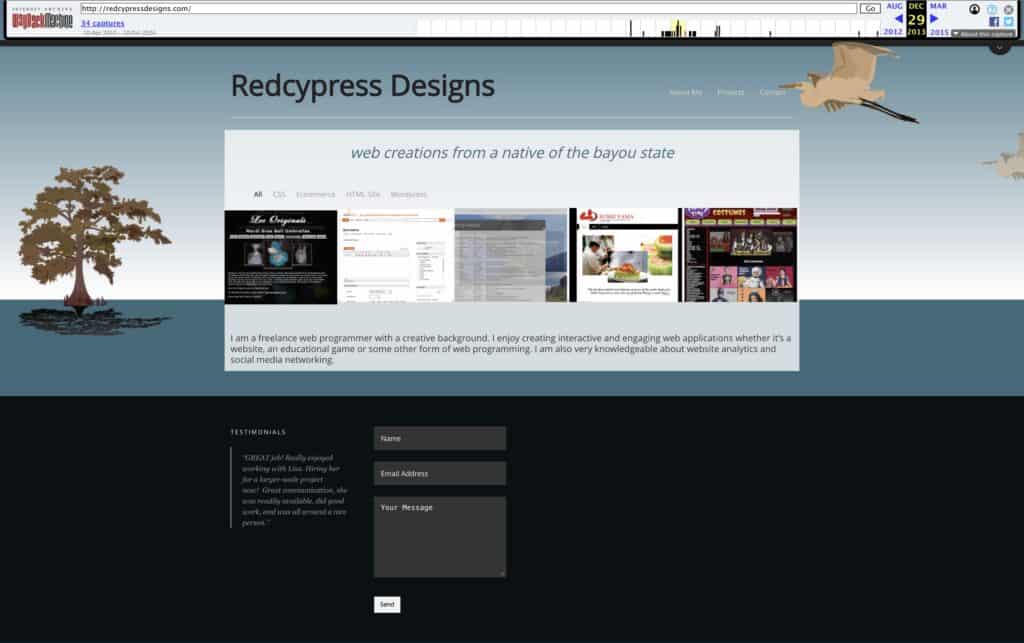
Another surprise was finding my original Redcypress Designs website from 2013.
If you’re familiar with Redcypress Designs today, you know it as a lifestyle blog where I write about home decorating, recipes, Nintendo games, and whatever else has caught my attention.
But Redcypress Designs wasn’t always a lifestyle blog.
It started as my freelance web development portfolio.
The old website featured an illustrated Louisiana landscape, a little cypress tree, and the tagline:
“Web creations from a native of the bayou state.”
I had almost forgotten about that tagline.
There were screenshots of websites I’d developed, descriptions of my projects, and testimonials from clients.
Seeing it again made me smile.
It’s funny how much a website can change while still keeping the same name.
Redcypress Designs has been part of my online identity for a very long time, even though what I use it for today is completely different.
Redcypress Designs Looks a Little Different Today
These days, Redcypress Designs is my lifestyle blog.
I write about things I genuinely enjoy, from home decorating and recipes to Nintendo games and little discoveries I want to share.
But I still build and customize the website myself.
I write custom WordPress functions, modify templates, create plugins, and spend far too much time adjusting layouts.
I’ll change the spacing on something, decide a heading looks slightly off, or get an idea for a new feature that I absolutely do not need but want to build anyway.
Some habits apparently never go away.
After spending so many years developing websites professionally, you’d think I might want to leave that part of my life at work.
Apparently not.
There’s still something satisfying about having an idea and figuring out how to make it happen.
Even when it takes considerably longer than I expected.
Some Things Haven’t Changed
Looking at those old websites, I can see plenty of things I’d do differently today.
The technology has changed. The tools have changed. The way we build websites has changed.
Flash is gone. WordPress has evolved. Websites that once looked modern now look like little time capsules.
But the part I’ve always enjoyed hasn’t really changed.
I still like figuring things out.
I still like taking an idea and turning it into something that works.
And I still get excited when I finally solve a problem that’s been driving me crazy.
It all started with an HTML class at LSU in 1996, thanks to a little encouragement from my dad and what may or may not have been an officially assigned chair.
Nearly thirty years later, I’m still at it.
I went looking through the Wayback Machine expecting to find a few old websites.
Instead, I found little pieces of my own history.
And apparently, after all these years, I still can’t leave a website alone.
More Redcypress Finds



More Practical Guides & Ideas


Lisa Thompson
 Hi, I'm Lisa, a software engineer, photographer, and creator behind Redcypress Designs. I share practical home solutions, beginner-friendly juicing tips, cozy living ideas, Pinterest experiments, and products that solve real everyday problems. Most of the projects, recipes, and reviews on this site come from my own experiences, testing, and occasional mistakes.
You May Also Like

How to Make Amazon Product Collages Using the Amazon App and Website

How I’m Rebuilding After Losing My Pinterest Account