

My Complete Juicing Setup (Everything I Actually Use at Home)
This post contains affiliate links. As an Amazon Associate, I earn from qualifying purchases.
When I first started juicing, I wasn’t sure what I actually needed beyond the juicer itself. Did I need special bottles? A produce wash? Extra strainers? Some mysterious juicing accessory everyone else apparently knew about?
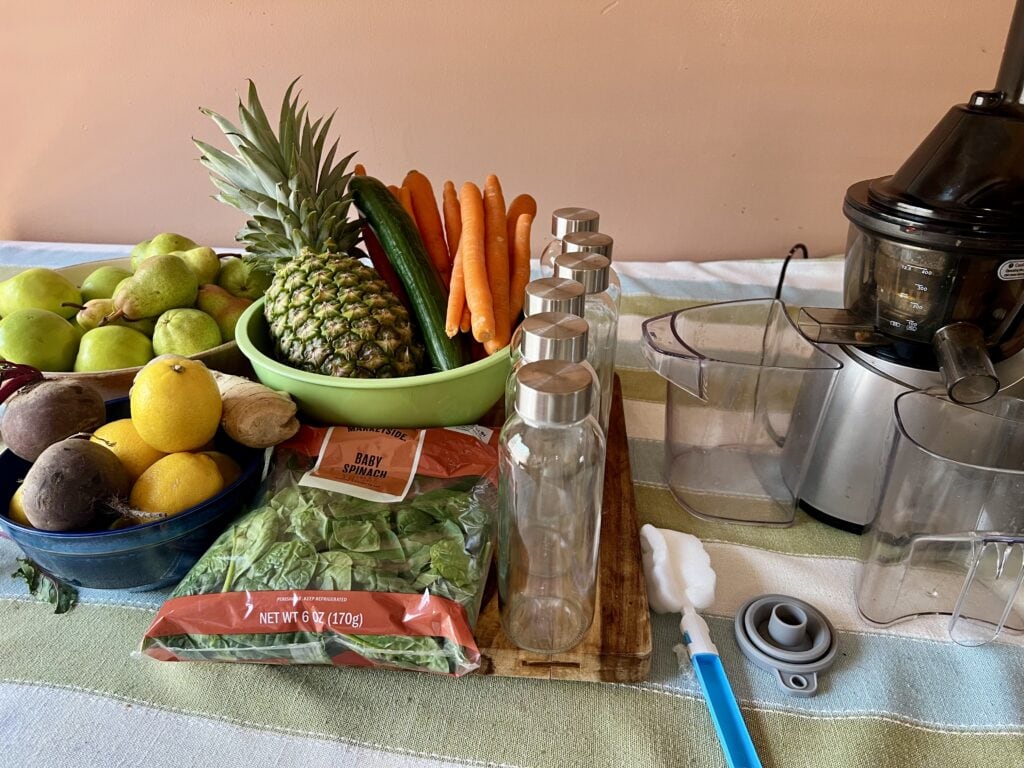
After actually juicing at home for a while, my setup has gotten pretty simple. There are a handful of things I use almost every time, a few extras that make prep and cleanup easier, and plenty of things you absolutely do not need to buy on day one.
The truth is, I use the same handful of tools every week.
Some make juicing easier. Others simply make cleanup faster. Together, they’ve turned juicing into a routine I genuinely enjoy instead of another kitchen chore.
If you’re putting together your own juicing station, here’s everything I actually use—and a few items I’d recommend if you’re just getting started.
My Juicer
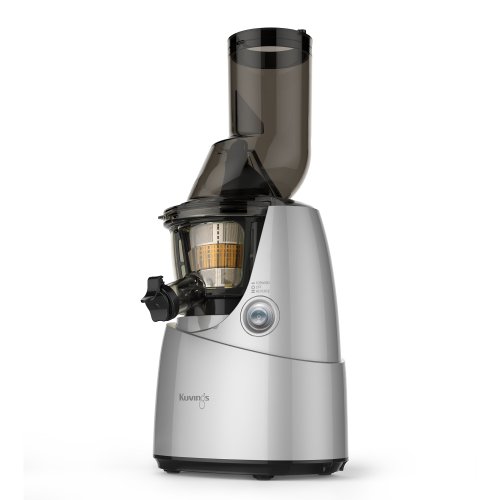
Kuvings Slow Juicer

This is the heart of my setup.
After researching different styles of juicers, I decided a slow juicer fit my lifestyle better. I don’t mind spending a few extra minutes making juice if it means getting more juice from my produce and having a quieter machine.
Things I love:
- Quiet operation
- Great juice yield
- Excellent with leafy greens
- Very little foam
- Produces fairly dry pulp
- Feels well built
Why I chose it: I wanted something I’d enjoy using for years rather than replacing after a season.
Some fruits and vegetables only need a good scrub instead of peeling, so this little tool gets used more often than I expected.
Citrus Juicer
When I’m making fresh orange juice or adding lemon to a recipe, I often reach for a manual citrus juicer instead of pulling out the larger machine.
It’s quick, easy to clean, and perfect for small jobs.

Washing & Prep
🫧 Produce Wash (Optional)
A produce wash isn’t something everyone needs, but I like having it on hand, especially when I’m juicing fruits and vegetables that I don’t peel.
Since juicing uses a lot of fresh produce, I want everything to be as clean as possible before it goes into the machine.
If you don’t use a produce wash, thoroughly rinsing your fruits and vegetables under cold running water is still a great option. The produce wash is simply an extra step that gives me a little more peace of mind.
I use it for:
- Apples
- Grapes
- Cucumbers
- Celery
- Leafy greens
- Berries
Salad Spinner
A salad spinner might seem like an odd juicing accessory, but it’s surprisingly useful if you enjoy green juices.
After washing spinach, kale, romaine, or other leafy greens, I run them through the salad spinner to remove excess water before juicing.
It helps in a few ways:
- Removes excess water after washing
- Keeps greens fresher longer in the refrigerator
- Makes prepping several batches of juice much easier
- Doubles as a kitchen tool for everyday salads
Since I use leafy greens in several of my favorite juice recipes, it’s one of those kitchen tools that gets used more often than I expected.

Vegetable Scrub Brush
One of the simplest tools in my kitchen is also one of the most useful.
A vegetable scrub brush makes it easy to clean produce like carrots, potatoes, cucumbers, apples, and beets without peeling away the nutritious outer layer.
Since many juice recipes call for whole fruits and vegetables, giving them a quick scrub is often all they need before they go into the juicer.
I also like that it’s reusable, inexpensive, and takes up almost no space in the kitchen drawer.
I use it most for:
- Carrots
- Beets
- Apples
- Cucumbers
- Potatoes
- Sweet potatoes

Prep Tools That Make Juicing Easier
Bowls
When I’m making several juice recipes at once, I like to sort my chopped fruits and vegetables into bowls before I start juicing.
It keeps the countertop organized, makes it easier to follow a recipe, and lets me focus on juicing instead of stopping to chop more produce halfway through. It also makes cleanup feel much more manageable since everything has its place.

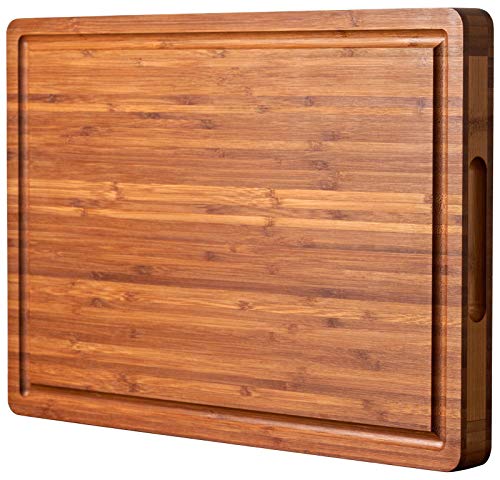
Large Cutting Board
A roomy cutting board gives me plenty of space to chop apples, celery, carrots, and other produce without constantly clearing the surface.
Sharp Chef’s Knife
A good knife makes prep faster and safer.
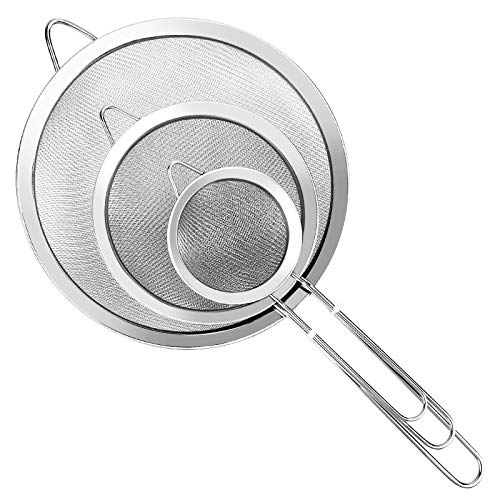
Fine Mesh Strainer
A fine mesh strainer wasn’t on my original shopping list, but it quickly became one of my most-used juicing tools.
Even with a slow juicer, some recipes naturally produce a little extra pulp or foam. Running the juice through a fine mesh strainer gives it a smoother texture, especially if you’re serving it to guests or making juices with oranges, pineapple, or berries.
I also use mine to:
- Remove extra pulp when I want a smoother juice
- Strain homemade citrus juice
- Catch seeds from lemons and limes
- Make juice look a little more polished when serving
It’s one of those inexpensive kitchen tools that ends up being useful far beyond juicing.
Juice Storage
Storage Bottles
Fresh juice is best when it’s stored properly.
I use glass bottles because they’re easy to clean, reusable, and fit nicely in the refrigerator.
They’re also perfect if I make several juices at once.


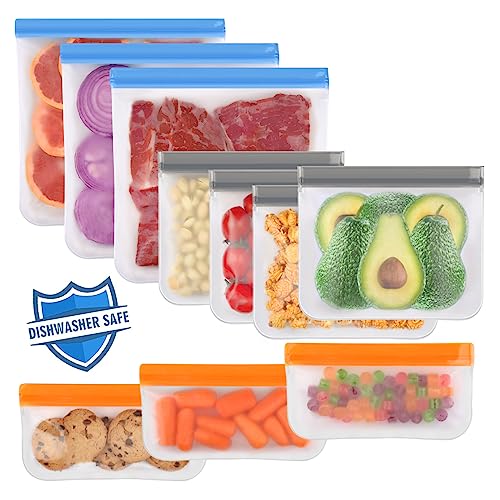
Produce Storage Containers
Keeping fruits and vegetables organized helps me waste less produce.
Having everything ready to grab makes it much more likely that I’ll actually juice during the week.
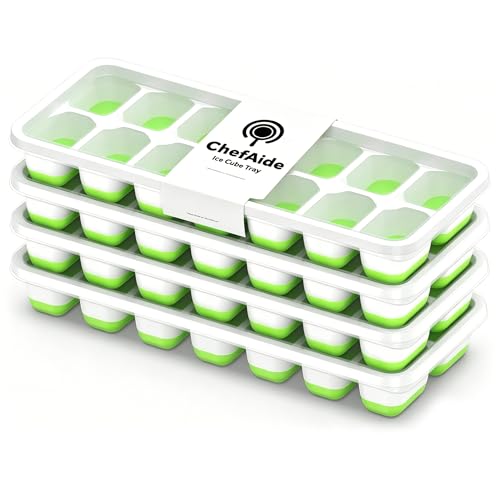
Ice Cube Trays
If I have extra juice, I freeze it into cubes.
They’re great for:
- Smoothies
- Sparkling water
- Mocktails
- Quick recipe additions
Cleaning Supplies
Cleaning up right away makes a huge difference.
These are the tools I use most often:
- Bottle brush
- Small cleaning brush for the juicer
- Dish towels
- Drying rack
How All of This Fits Into My Weekly Juicing Routine
People often ask if juicing takes a lot of time.
Honestly, the routine is what makes it easy.
Mine usually looks like this:
- Buy produce for the week.
- Wash everything.
- Chop larger fruits and vegetables.
- Juice several recipes at once.
- Fill my glass bottles.
- Refrigerate what I’ll drink over the next few days.
- Freeze any extra juice.
- Clean the juicer before everything dries.
Once everything has a place, the whole process feels much simpler.

Don’t Throw Away the Pulp
One thing I learned after starting to juice is that the leftover pulp doesn’t have to go in the trash.
Depending on the ingredients, I use it in:
- Smoothies
- Muffins
- Soups
- Vegetable broth
- Compost

That leftover juice pulp is fiber-rich gold — don’t throw it out! From veggie fritters to compost and even dog treats, here are 6 easy ways to reuse your juice scraps.
My Favorite Beginner Products
If you’re just getting started, these are the items I’d buy first:
- ✔️ Slow juicer
- ✔️ Glass juice bottles
- ✔️ Large cutting board
- ✔️ Sharp chef’s knife
- ✔️ Vegetable scrub brush
- ✔️ Bottle cleaning brush
- ✔️ Produce storage containers
- ✔️ Ice cube trays
You don’t need every gadget on day one. Start with the basics and add to your setup as you discover what works best for you.

If you’re brand new to juicing, don’t buy everything on this page. You can start with a juicer, a cutting board, a decent knife and something to store your juice in. Everything else can come later.
More Redcypress Finds




More Practical Guides & Ideas


Final Thoughts
One of the things I’ve learned is that juicing doesn’t have to be complicated.
A good juicer, a few practical tools, and a simple routine are really all you need.
My setup has evolved over time, but every item in my kitchen has earned its place because it makes juicing easier, faster, or more enjoyable. If you’re just starting out, I’d focus on building a setup you’ll actually use consistently rather than trying to buy every accessory at once.
Frequently Asked Questions
What juicer do you use?
I use a Kuvings slow juicer because I prefer the quiet operation and excellent juice yield. It’s been a great fit for my weekly juicing routine.
Do I need a slow juicer to get started?
Not at all. If you’re new to juicing or on a tighter budget, a centrifugal juicer can be a great way to see if juicing fits your lifestyle.
How do you store fresh juice?
I store fresh juice in glass bottles with tight-fitting lids and keep them refrigerated. If I make more than I can drink in a few days, I freeze the extra in ice cube trays.
What accessories are worth buying?
I’d prioritize a good cutting board, a sharp chef’s knife, glass storage bottles, a bottle brush, and produce storage containers. Those are the items I reach for every week.
Is it expensive to start juicing?
It doesn’t have to be. You can begin with a juicer and a few basic kitchen tools you may already own, then add accessories over time as your routine grows.
Lisa Thompson
 Hi, I'm Lisa, a software engineer, photographer, and creator behind Redcypress Designs. I share practical home solutions, beginner-friendly juicing tips, cozy living ideas, Pinterest experiments, and products that solve real everyday problems. Most of the projects, recipes, and reviews on this site come from my own experiences, testing, and occasional mistakes.
You May Also Like
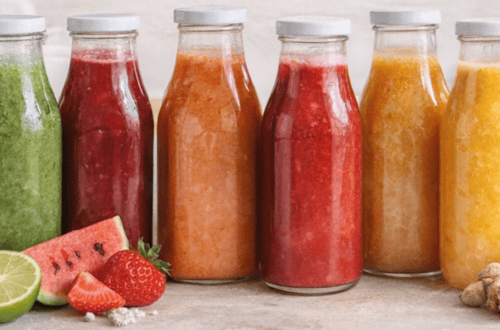
7 Juice Recipes That Actually Taste Good (Spring & Summer Edition)
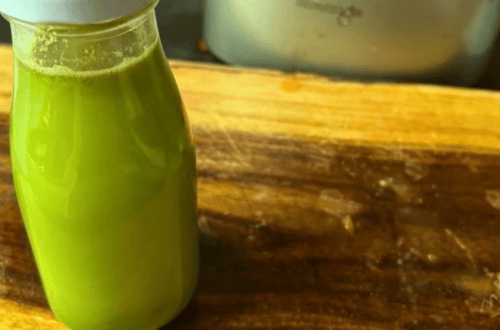
Juice Recipe: Minty Green Glow
