Slow Juicer vs. Centrifugal Juicer: Which One Should You Buy?
When I decided to start juicing at home, one of the biggest questions I had wasn’t what recipes to make—it was which type of juicer to buy.
There are two main styles you’ll see almost everywhere:
- Slow (cold press) juicers
- Centrifugal juicers
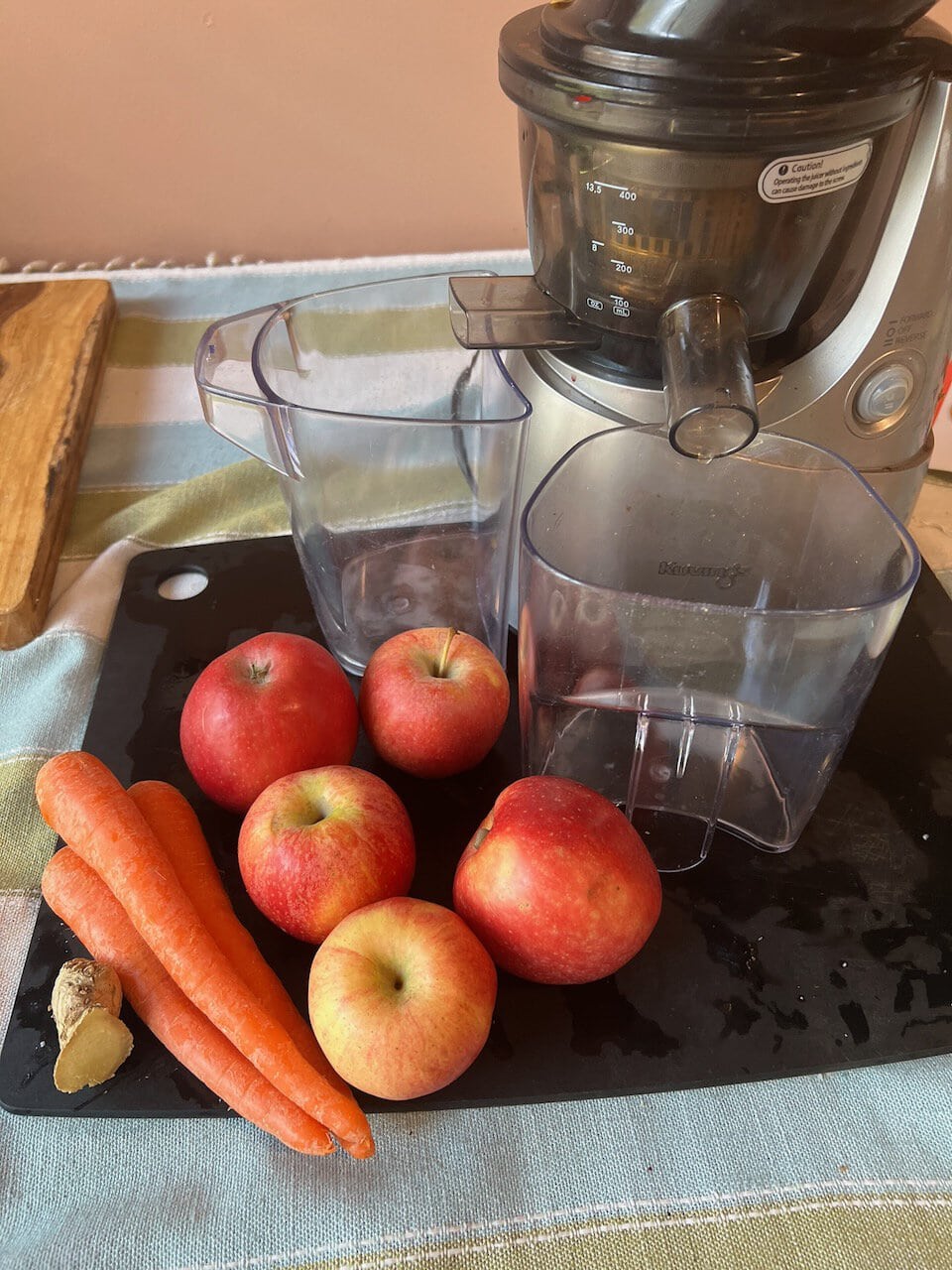
Both can make delicious fresh juice, but they’re designed a little differently. After comparing the options, I chose a Kuvings slow juicer, and it’s been a great fit for the way I like to juice at home.
If you’re trying to decide which one is right for you, here’s what I’ve learned.
This post contains affiliate links. As an Amazon Associate, I earn from qualifying purchases.
What’s the Difference?
Slow Juicer (Cold Press)
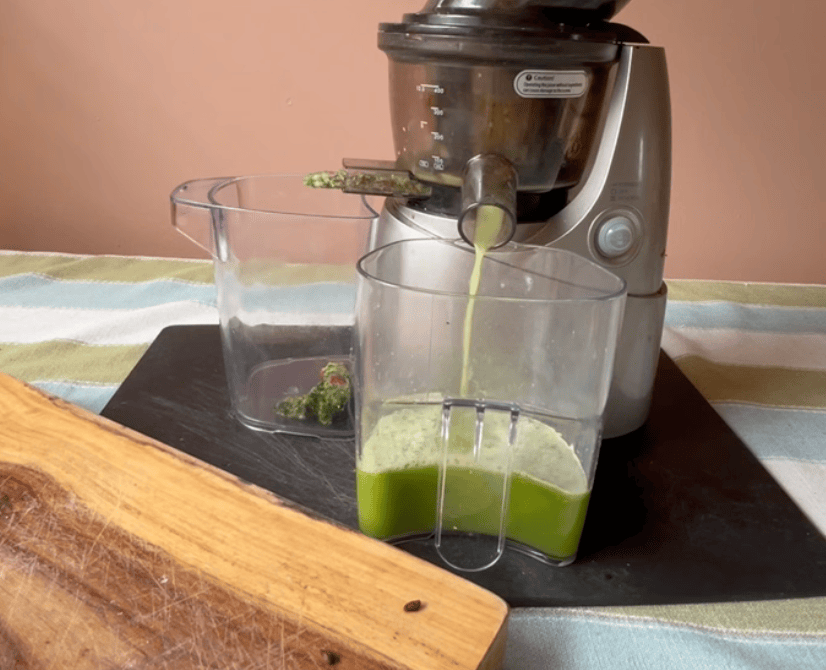
A slow juicer crushes and presses fruits and vegetables to extract the juice.
Instead of spinning at very high speeds, it slowly squeezes the produce, which creates less heat and foam.
These machines are especially good at leafy greens, carrots, celery, beets, and other harder vegetables.
Centrifugal Juicer
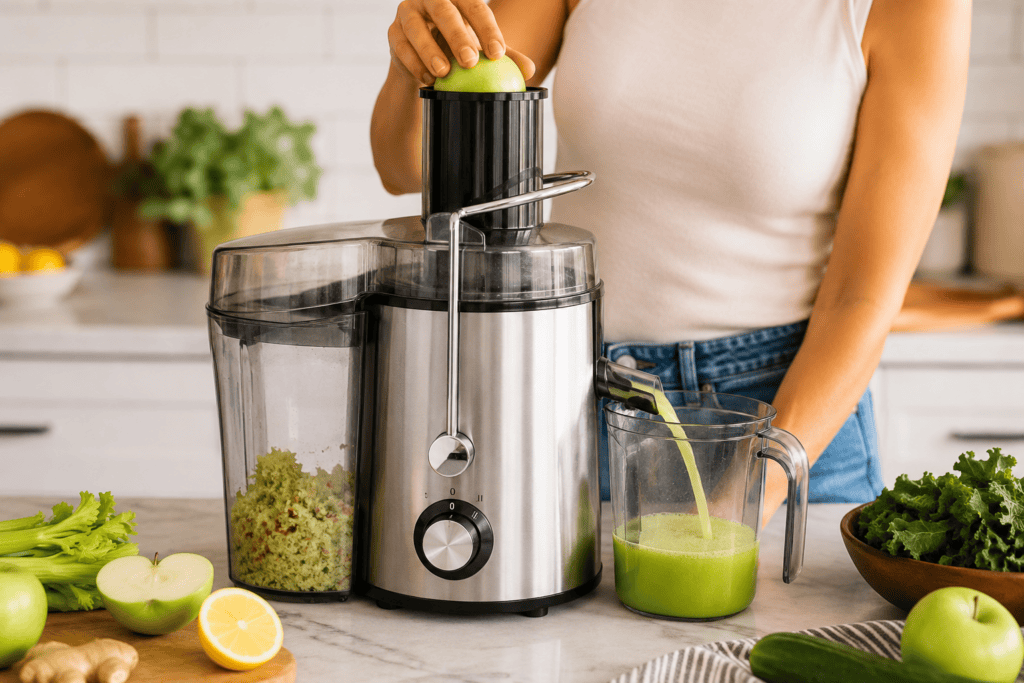
A centrifugal juicer works much faster.
It uses a rapidly spinning blade to shred produce while spinning the juice away from the pulp.
They’re usually less expensive and great if you simply want a quick glass of juice before heading out the door.
Quick Comparison
| Feature | Slow Juicer | Centrifugal Juicer |
|---|---|---|
| Speed | Slower | Very Fast |
| Noise | Quiet | Louder |
| Juice Yield | Excellent | Good |
| Leafy Greens | Excellent | Fair |
| Hard Vegetables | Excellent | Good |
| Foam | Very Little | More Foam |
| Cleanup | Moderate | Easy to Moderate |
| Price | Higher | Lower |
More Jucing Recipes & Guides
Whether you’re just getting started or looking for your next recipe, here are a few more resources you might enjoy.



Why I Chose a Slow Juicer
After reading reviews and comparing the options, I decided a slow juicer fit my lifestyle better.
I don’t mind spending a few extra minutes making juice if it means getting more juice from my produce and having a quieter machine.
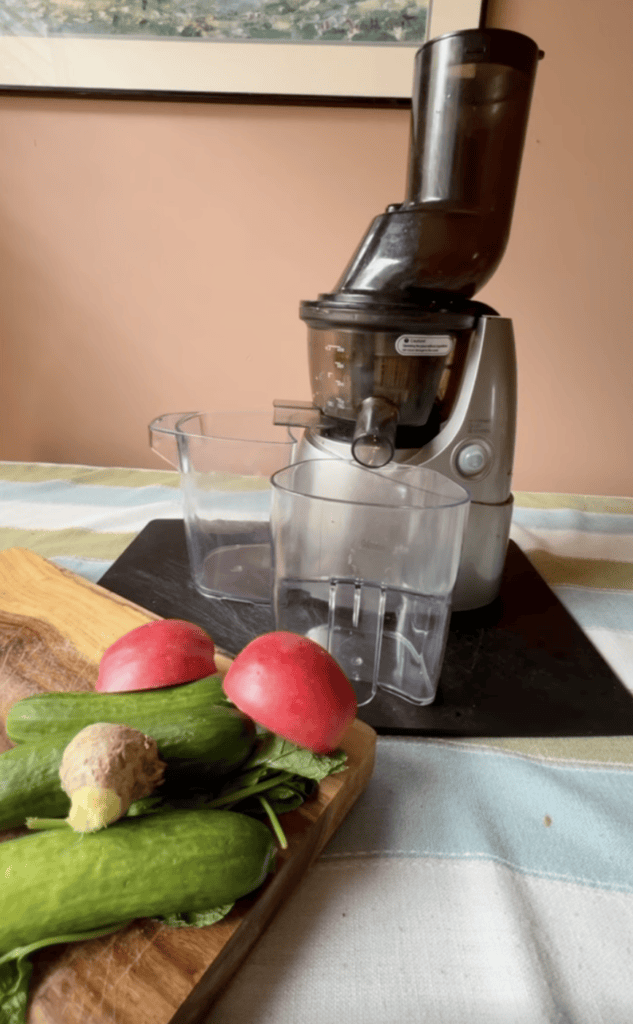
I’ve been really happy with my Kuvings slow juicer because it:
- Handles fruits and vegetables really well
- Produces very little foam
- Is surprisingly quiet
- Gets excellent juice from leafy greens
- Makes juicing feel like part of my morning routine instead of a race
Who Should Buy a Slow Juicer?
I’d recommend a slow juicer if you:
- ✅ Plan to juice several times a week
- ✅ Enjoy green juices
- ✅ Want the most juice from your produce
- ✅ Prefer a quieter kitchen
- ✅ Don’t mind spending a little more upfront
For me, this was the right decision because I knew juicing was going to become part of my weekly routine.
Who Should Buy a Centrifugal Juicer?
A centrifugal juicer might be the better choice if you:
- ✅ Want to spend less money
- ✅ Only plan to juice occasionally
- ✅ Need something very fast
- ✅ Mostly juice fruits
If you’re not sure you’ll stick with juicing long-term, this can be a great way to get started.
Slow Juicers I’d Recommend
As an Amazon Associate, I earn from qualifying purchases.
Although I personally use a Kuvings slow juicer, these are the models I’d recommend depending on your budget.
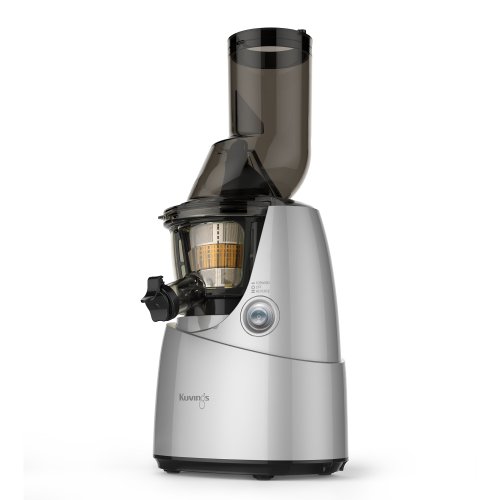
🏆 Kuvings (My Choice)
Best for: Frequent home juicers
This is the machine I use every week. It has been reliable, quiet, and consistently makes great juice.

Best for Beginners
A more affordable option that still gives you many of the benefits of a slow juicer.

Best Value
A great middle-ground option with multiple pulp settings and an approachable price.

Premium
If juicing is something you’ll do almost every day, the Nama J2 has earned a strong reputation for its large self-feeding hopper and excellent juice extraction.
Centrifugal Juicers I’d Recommend
As an Amazon Associate, I earn from qualifying purchases.

Best Budget
This is a great “try juicing without spending a fortune” option. It’s fast, simple, and inexpensive, but it’s louder and not as efficient with leafy greens. It consistently comes up as a strong value choice.

Best Value
This is probably the one I’d recommend most often. It offers many of the benefits of a slow juicer—quiet operation, good juice yield, and a compact footprint—without premium pricing. It has also tested very well in recent reviews.

Premium Pick
If someone tells me, “I’m going to juice several times a week and want the best experience,” this is where I’d point them. Nama has built an excellent reputation among home juicers, especially for juice quality and ease of use, though it’s a significant investment.
My Favorite Juicing Accessories
- Glass juice bottles
- Bottle cleaning brush
- Vegetable scrub brush
- Cutting board
- Sharp chef’s knife
- Produce storage containers
- Silicone funnel
- Ice cube trays for freezing juice
Frequently Asked Questions
Is a slow juicer really better than a centrifugal juicer?
Not necessarily. A slow juicer is better for people who juice frequently, enjoy leafy greens, and want maximum juice extraction. A centrifugal juicer is often the better choice for beginners who want speed and a lower price.
Can you juice leafy greens in a centrifugal juicer?
Yes, but slow juicers generally handle spinach, kale, and other leafy greens more efficiently.
Is a slow juicer harder to clean?
It depends on the model. Many modern slow juicers are designed for easy cleanup, though they often have a few more parts than centrifugal juicers.
Can I make the same recipes in either type of juicer?
Yes. Most juice recipes work in either machine, though you may notice differences in juice yield and foam.
Is a slow juicer worth the extra cost?
If you plan to juice several times a week, many people find the quieter operation, better yield, and versatility worth the investment.
New to Juicing? Read These Next
- Juicing at Home: Cozy, Beginner-Friendly Juice Recipes
- Creative Ways to Use Leftover Juice Pulp
- 2 Easy Sweet & Spicy Slow Juicer Recipes I Made This Weekend
Final Thoughts
There isn’t one perfect juicer for everyone.
If you simply want an affordable way to try juicing, a centrifugal juicer can be a fantastic starting point.
If you’re like me and enjoy making fresh juice several times a week, I think a slow juicer is worth the investment. I’ve been very happy with my Kuvings because it fits the way I like to juice at home—quietly, consistently, and without feeling rushed.
Lisa Thompson
 Hi, I'm Lisa, a software engineer, photographer, and creator behind Redcypress Designs. I share practical home solutions, beginner-friendly juicing tips, cozy living ideas, Pinterest experiments, and products that solve real everyday problems. Most of the projects, recipes, and reviews on this site come from my own experiences, testing, and occasional mistakes.
You May Also Like

The Case for Slow Juicing: More Nutrients, Less Fuss
2 Easy Sweet & Spicy Slow Juicer Recipes I Made This Weekend